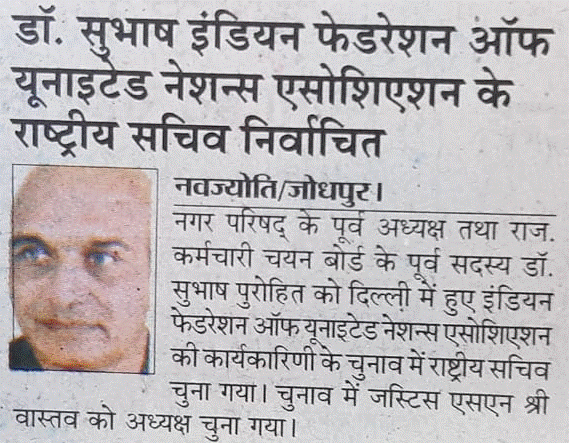
Ph.D. Journalism · Advocate · Arbitrator · Mediator
President, Jodhpur Municipal Council
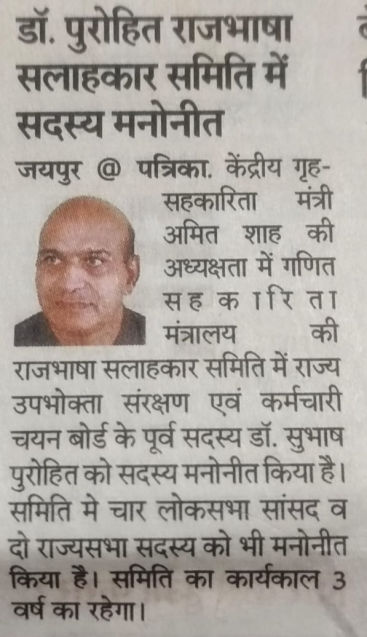
Advisor, Rajasthan State Human Rights Commission
Champion of Truth, Justice & the Common Citizen
"His commitment to higher values of truth, justice and fair play guided him throughout his career — and guides us still."
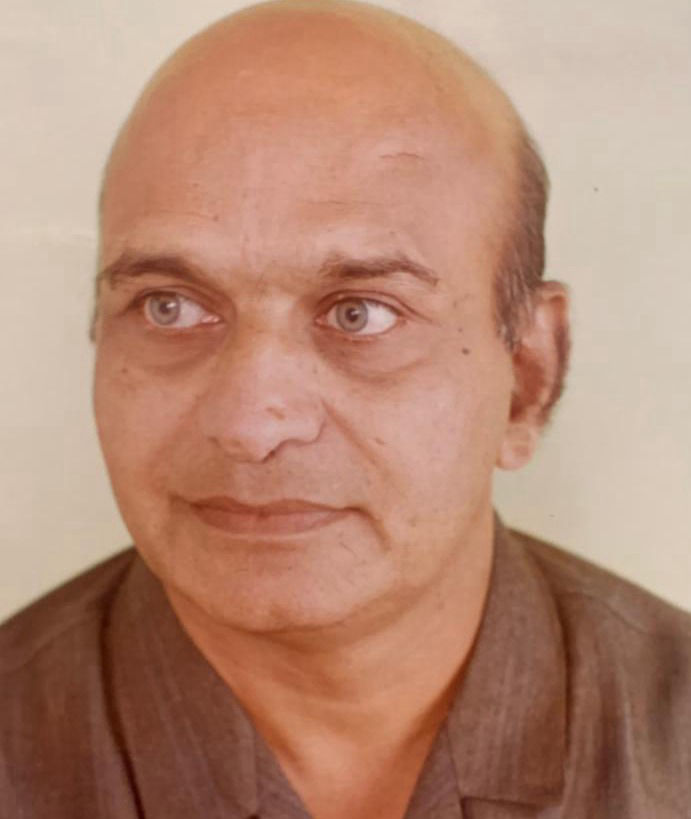
A cinematic tribute to Dr. Subhash Purohit — his life, his causes, and the legacy he leaves behind for every citizen.
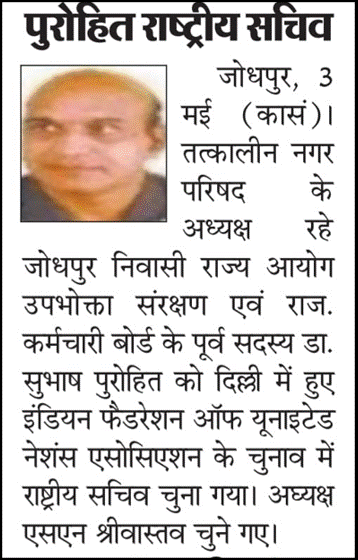
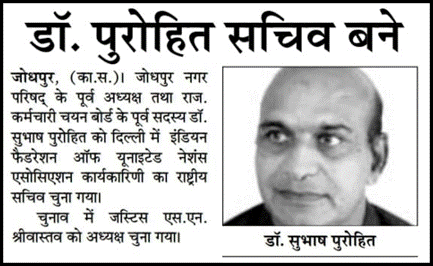
Dr. Subhash Purohit of Jodhpur, Rajasthan was not a man who chose one path — he walked them all, and walked each with distinction. A lawyer of 25 years' standing before the Rajasthan High Court, a doctoral scholar of journalism, a civic administrator who served as President of Jodhpur Municipal Council, and a tireless voice for the voiceless through the Consumer Protection and Human Rights institutions of Rajasthan — he embodied the belief that public life is public service.
His academic journey was exceptional: graduate in English Literature, postgraduate in both Hindi and History, holder of an LL.B., a Ph.D. in Journalism, and a Diploma in Export-Import Management. This breadth powered a career that ranged across courtrooms, newsrooms, council chambers, and international assembly halls.
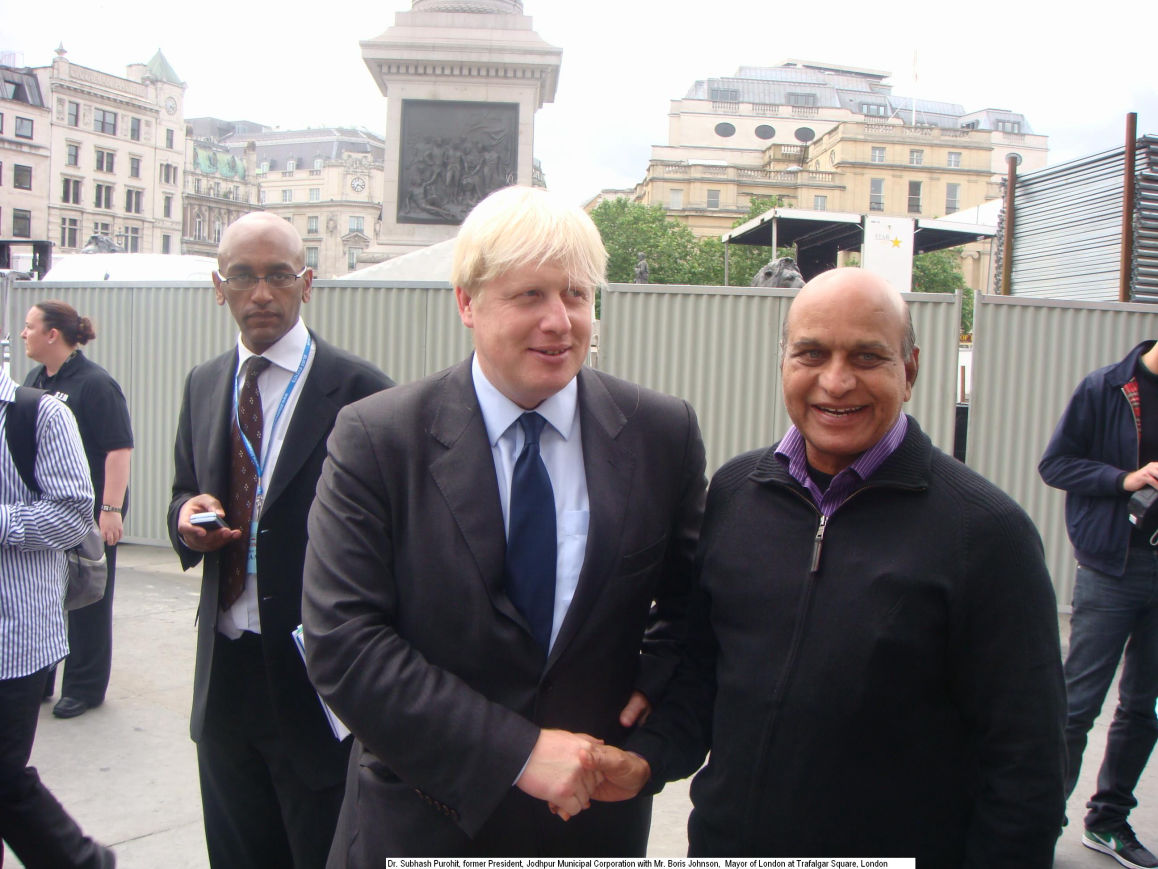
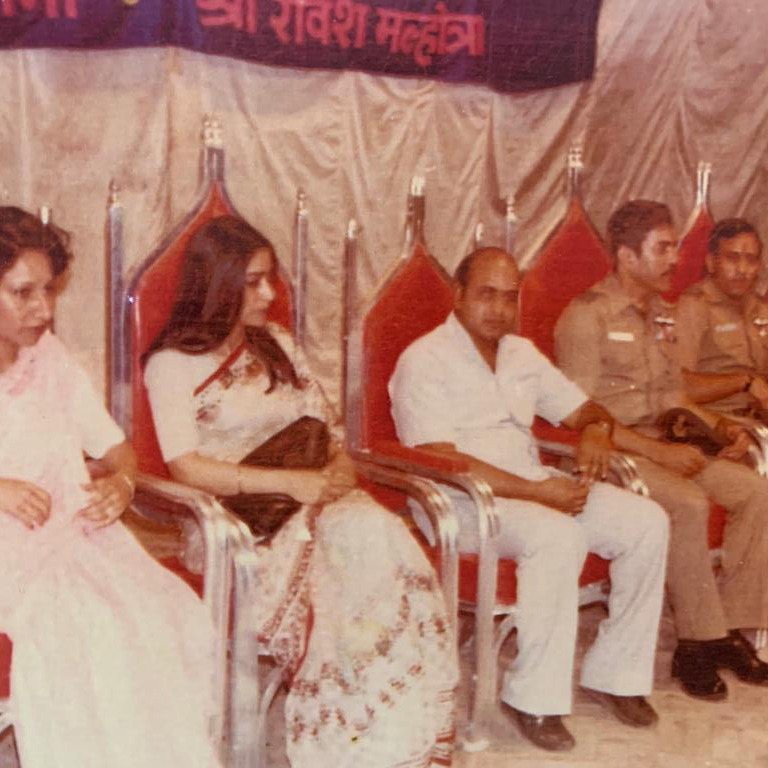
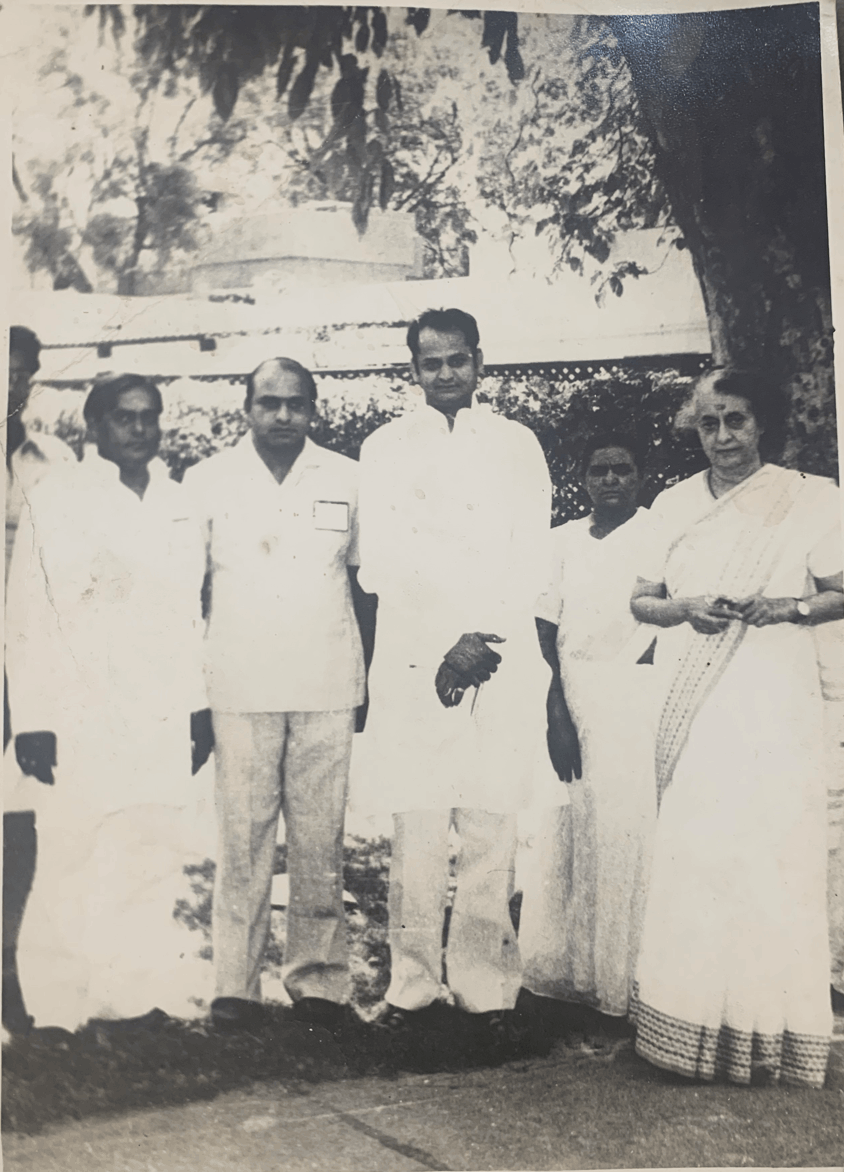
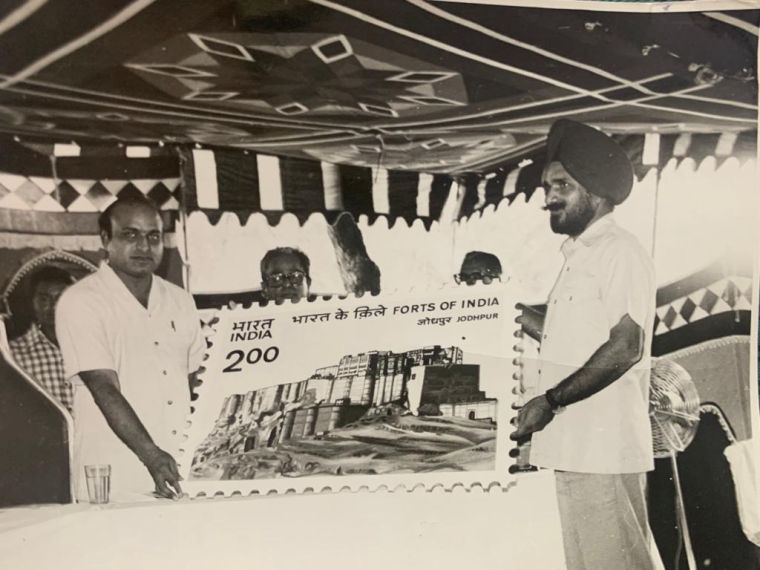
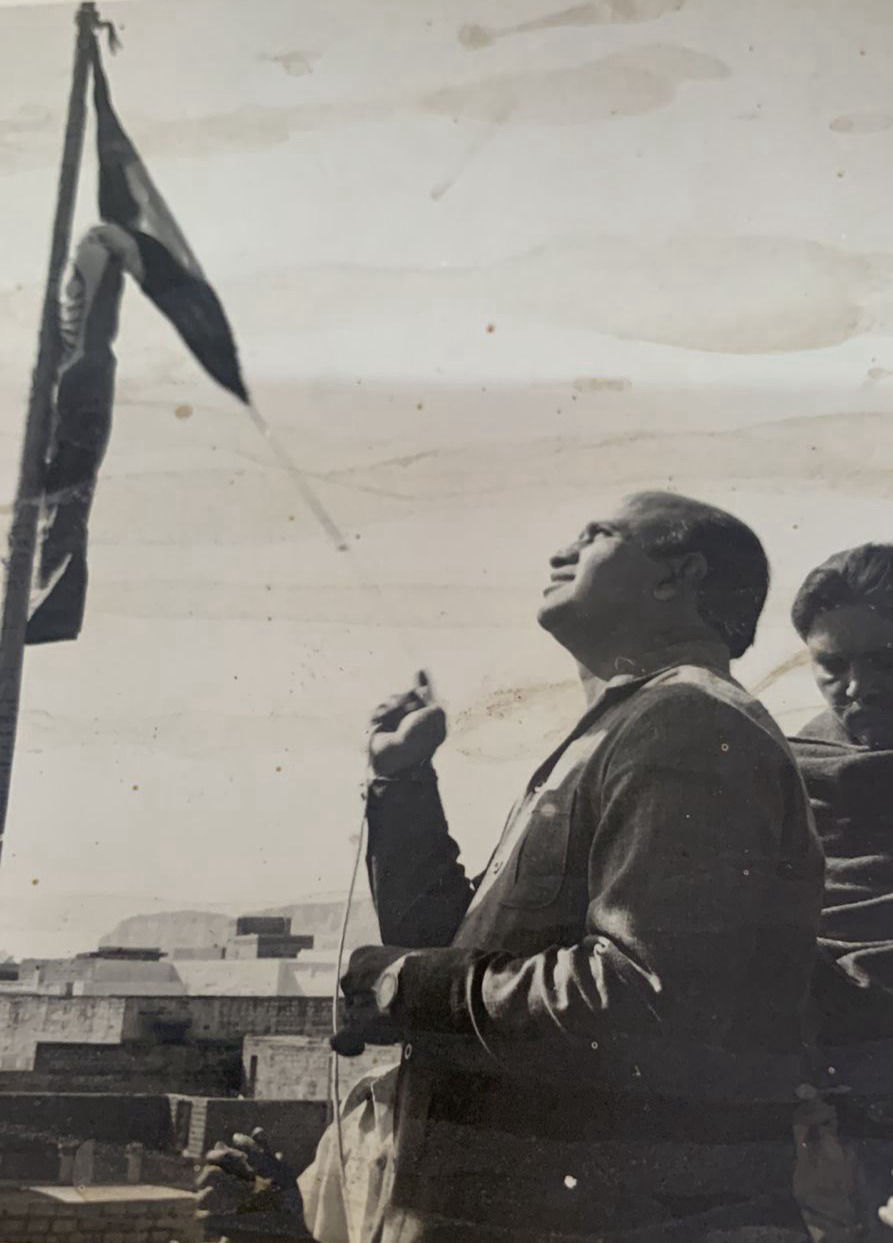
He championed the rights of consumers when few did, wrote on human rights and RTI in national dailies, served as an accredited journalist with the Government of Rajasthan for a decade, and sat on selection boards and university governing councils shaping Rajasthan's future. He met Prime Minister Indira Gandhi, welcomed India's first astronaut Rakesh Sharma home as President of Jodhpur Municipal Council, met Boris Johnson in London, and represented India at international bodies including the UN and ICOMOS UK.
Dr. Purohit's life was guided by an urge "to serve the society and to find solutions for the several problems confronting the people." That urge never dimmed. This site is his continuing voice.
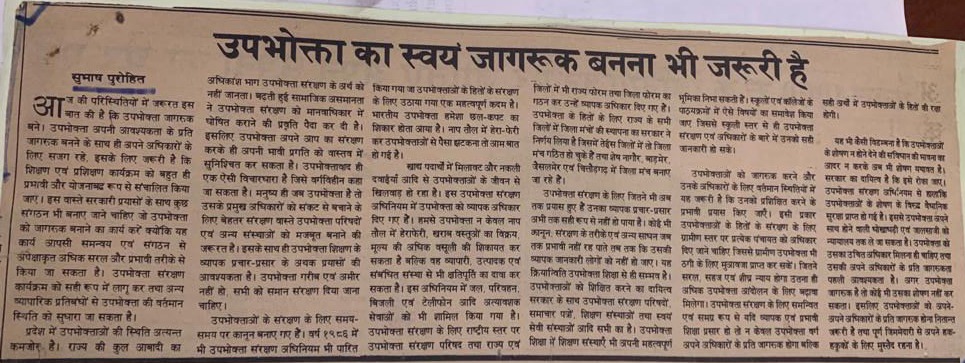
Throughout his life, Dr. Subhash Purohit dedicated himself not merely to practising the law, but to ensuring that the rights it enshrined reached every citizen. These are the domains to which he devoted his career, his pen and his public voice — presented here in plain language, so that his work of informing, protecting and empowering the common citizen continues long after him.
The Consumer Protection Act (2019) gives every Indian citizen the right to seek redress against defective goods, deficient services, unfair trade practices, and misleading advertisements. A complaint can be filed at the District Consumer Commission with no lawyer required and minimal fees.
The three-tier system — District, State, and National Commissions — was designed specifically to be accessible and affordable. Dr. Purohit served on the Rajasthan State Consumer Disputes Redressal Commission and chaired the Institute of Consumer Education and Research, bringing these protections out of courtrooms and into communities.
If you have been wronged as a consumer, you have legal recourse. File a complaint. Use the law. That is precisely what it is there for.
Consumer Protection Act, 2019The Right to Information Act (2005) empowers every Indian citizen to request information from any public authority — government departments, municipal bodies, police stations, universities — and receive a response within 30 days. The filing fee is just ₹10.
RTI can be used to find out why a road wasn't repaired, why a ration card was delayed, where public funds were spent, or what contracts were awarded in your locality. It is among the most powerful democratic instruments available to an ordinary citizen.
Dr. Purohit used his journalistic platform to teach Rajasthanis how to file RTI requests, what to do when they were denied, and how to use the law to demand accountability from those in power.
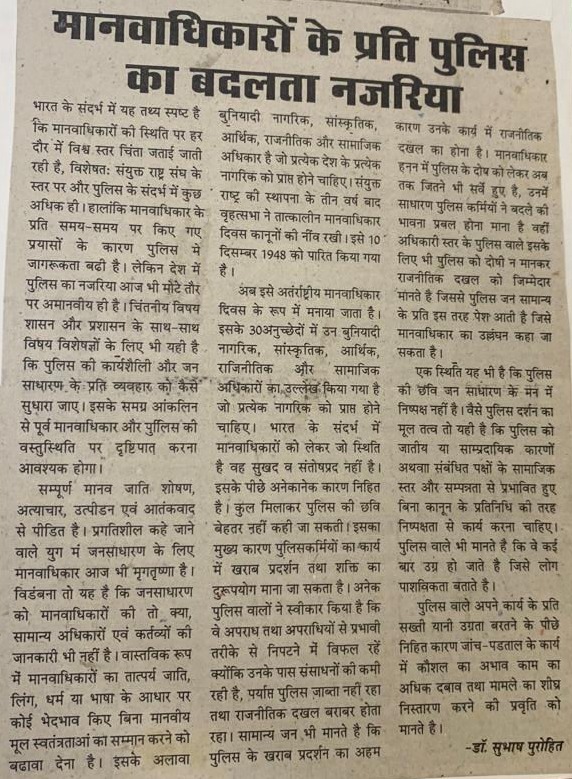
Right to Information Act, 2005The Protection of Human Rights Act (1993) established the National and State Human Rights Commissions to inquire into complaints of violations by state actors. Any citizen who believes their fundamental rights have been violated can approach their State Commission.
Fundamental rights — the right to equality, freedom of speech, protection against exploitation, and the right to constitutional remedies — are guaranteed by the Constitution of India and enforceable in every court in the land.
Dr. Purohit's work as Advisor to the Rajasthan State Human Rights Commission and as Chairman of the Centre for Human Rights was grounded in a simple belief: that the law must reach those who need it most — and that informing citizens of their rights was itself an act of justice.
Protection of Human Rights Act, 1993The Ancient Monuments and Archaeological Sites and Remains Act (1958) protects monuments of national importance, prohibiting construction within 100 metres of protected sites. India has over 3,600 centrally protected monuments and thousands more at state level.
Jodhpur's Mehrangarh Fort, its havelis, stepwells, and vernacular architecture represent a civilisational memory that belongs not just to Rajasthan but to all of humanity. Heritage tourism, when sensitively managed, also sustains local livelihoods and economies.
Every citizen has the right to report encroachment or damage to a protected monument. The Archaeological Survey of India and State Archaeology Departments are obliged to act. Dr. Purohit's membership of INTACH, ICOMOS UK, and the Indian Trust for Rural Heritage was rooted in the conviction that heritage belongs to everyone — and everyone has a stake in its protection.
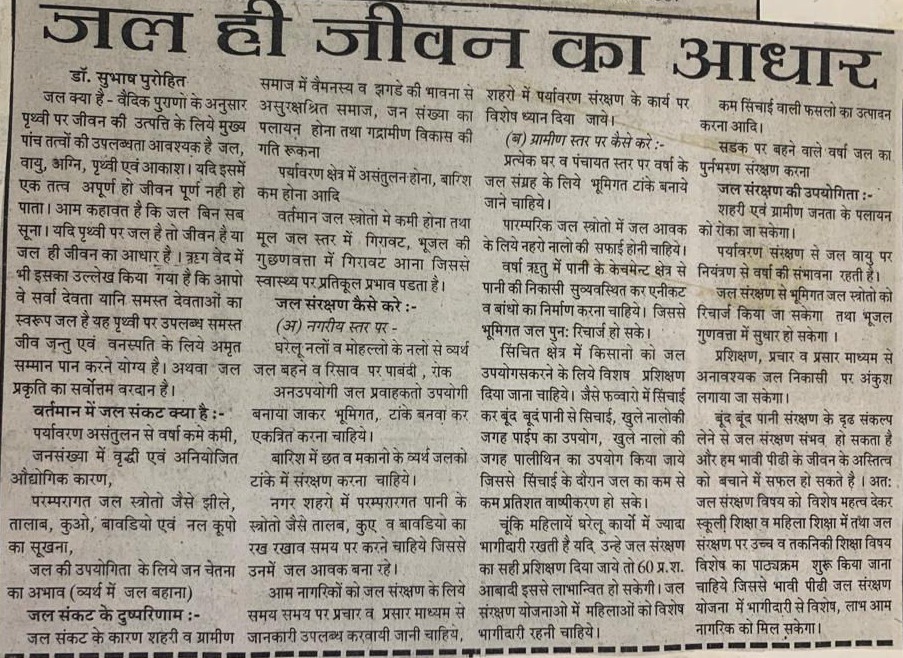
AMASR Act, 1958 · INTACH · ICOMOSRajasthan covers over 60% of India's arid zone. Traditional water conservation structures — the stepwells, johads, kunds and baoris — sustained communities for centuries. Many have been neglected, encroached upon, or destroyed under development pressure.
The Environment Protection Act (1986) and the Water (Prevention and Control of Pollution) Act (1974) provide a legal framework for environmental protection. Citizens can file public interest complaints with State Pollution Control Boards and approach the National Green Tribunal for environmental violations.
Dr. Purohit's articles connecting water conservation with RTI made a powerful argument: if citizens can demand information about government spending on water infrastructure, they become active guardians rather than passive recipients of a resource on which their lives depend.
Environment Protection Act, 1986 · NGTThe 74th Constitutional Amendment (1992) devolved significant powers to Urban Local Bodies — municipalities and municipal corporations — making them the third tier of government. Ward councillors, elected by citizens, have legal authority over local infrastructure, sanitation, water supply and urban planning.
Citizens have the right to attend ward meetings, access municipal budgets, and file RTI requests with municipal corporations. Grievance redressal mechanisms exist at the local level in every municipality in India.
Dr. Purohit, as President of Jodhpur Municipal Council overseeing 2,000 employees, understood that governance closest to the citizen is governance most accountable to the citizen. He served on the Executive Council of the Rajasthan Institute of Local Self Government to strengthen this conviction at the institutional level.
74th Constitutional Amendment, 1992

Did you know Dr. Purohit? Was your life touched by his work? Your tribute will appear on this wall for all visitors to read and be inspired by. Only your memory or tribute is required — all other details are entirely your choice to share.